Stress Relief Gummies UK: 4 Ingredients That Actually Work (2026)

Stress relief gummies only work when they carry a real dose of a real extract, and the four ingredients with clinical trial evidence for stress and cortisol are ashwagandha (600 mg root extract per day, Chandrasekhar 2012 showed a significant cortisol drop over 60 days), magnesium (200 to 400 mg elemental per day for gentle HPA-axis support), L-theanine (200 mg for calm alertness) and vitamin B6 (a cofactor for GABA and serotonin synthesis). Most supermarket gummies quote gummy-total weight on the front (like "3,000 mg ashwagandha") but hide only 150 to 300 mg of actual extract on the back. Read the extract ratio and the withanolide percentage, aim for 600 mg or more of ashwagandha per daily serving, and give any gummy a fair 4 to 8 week trial before deciding.
This guide covers what the trials actually show, how to read a UK gummy label without getting fooled, when a gummy beats a capsule (and when it does not), and the honest role stress gummies play alongside sleep, movement and, if it comes to it, a GP visit.
Key Takeaway
Not all stress gummies are equal. Look for named extracts, transparent dosages, and ingredients backed by clinical research rather than just a pleasant flavour and appealing label.
In this article
- Why have stress relief gummies become so popular?
- Which ingredients actually help with stress?
- Why is ashwagandha the most-studied stress ingredient?
- What should you look for in an ashwagandha gummy?
- How do magnesium gummies complement ashwagandha?
- Ashwagandha gummies vs capsules: which format is better?
- How long do stress relief gummies take to work?
- What is the gut-brain connection and why does it matter for stress?
- How do you read a stress gummy label without getting fooled?
- Which product should you actually try first?
- When should you speak to your GP instead?
- Frequently asked questions
Why have stress relief gummies become so popular?
Capsules and tablets have always been the default supplement format, but many people find them difficult to swallow or easy to forget. Gummies solve both problems by turning supplementation into something you can look forward to rather than endure.
The format also suits people who are new to supplements and want a low-commitment way to start. A beginner's guide to supplements is useful for building wider context, but gummies are often where people begin their journey.
There is a trade-off, however. Gummies have less capsule space than tablets, so manufacturers need concentrated extracts to deliver a meaningful dose, and cheap gummies often contain token amounts of active ingredient hidden behind flavour and branding.
Which ingredients actually help with stress?
Several natural ingredients have been studied for their effects on stress, cortisol levels and perceived anxiety. Ashwagandha is the most researched botanical for stress support, with multiple randomised controlled trials in healthy adults showing reductions in self-reported stress and serum cortisol.
Magnesium is another well-supported option that plays a role in over 300 enzymatic reactions in the body, including those involved in nervous system regulation. Many people in the UK do not meet the recommended daily intake, and low magnesium status has been associated with increased stress reactivity.
L-theanine, an amino acid found naturally in green tea, promotes relaxed alertness without drowsiness, and B vitamins (particularly B6) contribute to normal psychological function and are often included in well-formulated stress supplements.
| Ingredient | Primary Mechanism | Evidence Level |
|---|---|---|
| Ashwagandha (root extract) | Cortisol modulation, adaptogenic | Strong (multiple RCTs) |
| Magnesium | Nervous system regulation, GABA support | Strong (meta-analyses) |
| L-Theanine | Alpha brain wave promotion, relaxation | Moderate (small RCTs) |
| Vitamin B6 | Neurotransmitter synthesis | Supportive (cofactor role) |
Why is ashwagandha the most-studied stress ingredient?
Ashwagandha (Withania somnifera) is classified as an adaptogen, meaning it is thought to help the body manage stress more effectively over time. It is the single most researched natural ingredient for stress reduction in supplement form, and the active compounds responsible for its effects are called withanolides.
The strength of an ashwagandha gummy depends on two things: the type of extract used and the dose per serving. A 30:1 root extract concentrate, for example, delivers far more active compounds than raw ashwagandha powder, and products that list "ashwagandha" without specifying the extract ratio or withanolide content are usually underdosed.
What the Research Says
Chandrasekhar K, Kapoor J, Anishetty S (2012). A prospective, randomized double-blind, placebo-controlled study of safety and efficacy of a high-concentration full-spectrum extract of ashwagandha root in reducing stress and anxiety in adults. Indian Journal of Psychological Medicine, 34(3): 255-262. DOI: 10.4103/0253-7176.106022. Participants taking 300 mg of high-concentration ashwagandha root extract twice daily for 60 days showed significantly reduced scores on every stress-assessment scale, alongside a substantial fall in serum cortisol versus placebo.
What should you look for in an ashwagandha gummy?
Not every ashwagandha gummy is made the same way. The concentration ratio and withanolide percentage are the two most important numbers to check on the label, because a product using a 30:1 root extract standardised to a stated withanolide percentage will deliver significantly more active compounds than one using basic powder.
Dosage per serving matters too. Many gummies contain only 150 mg to 300 mg of ashwagandha per gummy, which may fall below clinically studied doses, so look for a product that provides at least 600 mg per daily serving from a concentrated extract.
The Ashwagandha Gummies 600mg from Supplements Wise use a 30:1 root extract delivering 1,200 mg per two-gummy serving with 60 mg of withanolides. That puts the dose in line with clinical research, in a natural raspberry flavour with no artificial colourings.
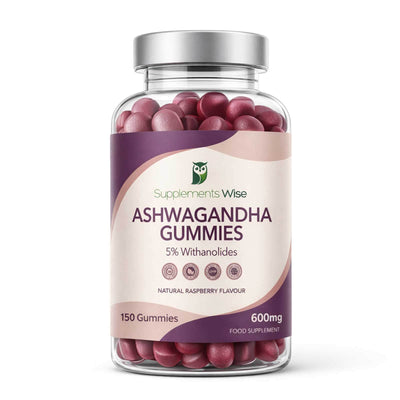
Ashwagandha Gummies 600mg, 150 Gummies
1,200 mg ashwagandha from 30:1 root extract per two-gummy serving with 60 mg of withanolides. Natural raspberry flavour, 75-day supply.
UK GMP-certified · Vegetarian · 30-day returns · Free UK shipping
£16.95
Add to CartHow do magnesium gummies complement ashwagandha?
Magnesium is not just for muscles and bones. It plays a direct role in regulating the hypothalamic-pituitary-adrenal (HPA) axis, which is the body's central stress-response system, and when magnesium levels are low the HPA axis can become more reactive, making everyday stressors feel more intense.
A magnesium citrate gummy is one of the most convenient ways to top up daily intake. Citrate is a well-absorbed form that is gentle on the stomach, making it a practical choice for people who want stress and relaxation support without taking multiple capsules.
The Supplements Wise Magnesium Citrate Gummies deliver 180 mg of magnesium per two-gummy serving in a natural berry flavour with 120 gummies per bottle. Pairing a magnesium gummy with an ashwagandha gummy covers two different but complementary pathways for managing daily stress.

Magnesium Citrate Gummies, 120 Natural Berry
180 mg elemental magnesium from citrate per 2-gummy serving (48 per cent NRV), pectin-based, no artificial flavours. 60-day supply.
UK GMP-certified · Vegan · 30-day returns · Free UK shipping
£17.95
Add to CartAshwagandha gummies vs capsules: which format is better?
Both formats can deliver effective doses of ashwagandha, and the best choice comes down to personal preference. Gummies suit people who dislike swallowing capsules or who want supplementation to feel less clinical, and they tend to have better taste compliance, meaning you are more likely to take them consistently.
Capsules can hold more extract per unit and sometimes offer branded formulations like KSM-66. The Ashwagandha KSM-66 Capsules from Supplements Wise contain 500 mg of full-spectrum KSM-66 root extract per capsule, one of the most clinically validated ashwagandha extracts available.
| Feature | Gummies | Capsules |
|---|---|---|
| Ease of use | Chewable, pleasant taste | Requires swallowing |
| Typical dose per serving | 600mg-1,200mg | 500mg-1,000mg |
| Compliance | Higher (enjoyable format) | Lower for some users |
| Vegan options | Pectin-based (no gelatin) | HPMC shells |
| Best for | Capsule-averse, new users | Higher-dose flexibility |
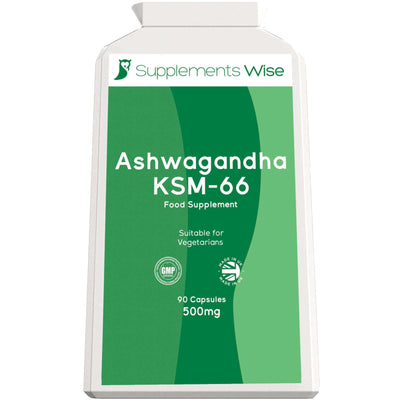
Ashwagandha KSM-66 500mg, 90 Capsules
The most clinically studied ashwagandha extract at 500 mg per capsule, standardised to at least 5 per cent withanolides. One capsule a day, 90-day supply.
UK GMP-certified · Vegetarian · 30-day returns · Free UK shipping
£15.95
Add to CartHow long do stress relief gummies take to work?
Stress relief gummies are not fast-acting sedatives. Ashwagandha and magnesium both work through gradual mechanisms that build up over days and weeks of consistent use, and most clinical trials on ashwagandha measure outcomes at the 30 to 60 day mark.
Some people notice a subtle shift in how they respond to daily pressures within the first two weeks, while others may need the full 8-week period used in many studies before feeling a meaningful difference. The key is daily consistency rather than taking gummies only when you feel stressed.
What is the gut-brain connection and why does it matter for stress?
Your gut and brain communicate constantly through the vagus nerve and shared neurotransmitter pathways. Around 95 per cent of the body's serotonin is produced in the gut, which means digestive health has a direct influence on mood and stress resilience.
Chronic stress can disrupt the balance of gut bacteria, and poor gut health can increase stress sensitivity, creating a cycle that feeds itself. Supporting your digestive system alongside a stress supplement can help address both sides of this loop, and our gut health supplements guide covers this in more detail.
Key Takeaway
Stress management works best as a multi-angle approach. Combining a well-dosed stress relief gummy with good sleep, regular movement, and gut health support gives you the strongest foundation.
How do you read a stress gummy label without getting fooled?
Labels on stress gummies can be misleading if you do not know what to look for. The most common trick is listing the total weight of the gummy rather than the active ingredient dose, so a gummy weighing 3,000 mg might contain only 150 mg of actual ashwagandha.
Check for these three things: the specific extract name or ratio, the dose of active ingredient per serving, and whether the product uses any proprietary blends. Proprietary blends list ingredients but hide individual amounts, making it impossible to assess potency.
| Label Claim | What It Might Mean | What to Look For Instead |
|---|---|---|
| "Ashwagandha 3000mg" | Total gummy weight, not extract | Extract dose with concentration ratio |
| "Proprietary stress blend" | Individual doses are hidden | Each ingredient with its own mg listed |
| "With added vitamins" | Token amounts for label appeal | % NRV shown for each vitamin |
| "Natural flavour" | Could still contain artificial colours | No artificial colours or flavours stated |
Worth Knowing
Stress relief gummies are food supplements, not medicines. They should be used alongside a balanced diet and healthy lifestyle, not as a replacement for professional medical advice. If you are experiencing persistent anxiety or mental health concerns, speak to your GP or contact Mind for UK-specific support.
Which product should you actually try first?
The quickest way to decide is to match the product to your loudest issue. The table below maps common UK stress patterns onto a sensible first move.
| Loudest issue | Start here | Sensible daily dose | Review at |
|---|---|---|---|
| General daily stress, capsule-averse | Ashwagandha Gummies 600 mg | 2 gummies (1,200 mg root) | 4 to 8 weeks |
| Serious sleep disruption + tense muscles | Magnesium Citrate Gummies | 2 gummies (180 mg elemental) | 4 weeks |
| Chronic stress, want trial-matched dose | Ashwagandha KSM-66 Capsules | 1 capsule (500 mg KSM-66) | 4 to 8 weeks |
| Both daytime tension and disrupted sleep | Stack ashwagandha + magnesium | Ashwagandha AM, magnesium PM | 6 to 8 weeks |
When should you speak to your GP instead?
Supplements can support your body's natural stress response, but they are not a substitute for medical treatment when stress becomes overwhelming. If stress is affecting your sleep, appetite, relationships, or ability to work, it is worth speaking to a healthcare professional. The NHS stress guidance is the honest first stop.
You should also consult your GP before taking ashwagandha if you are pregnant, breastfeeding, taking thyroid medication, or on immunosuppressants. Magnesium supplements should be discussed with your doctor if you have kidney disease or take heart medications, and a magnesium dosage guide can help you understand the recommended amounts.
What the Research Says
Boyle NB, Lawton C, Dye L (2017). The effects of magnesium supplementation on subjective anxiety and stress: a systematic review of 18 studies. Nutrients, 9(5): 429. DOI: 10.3390/nu9050429. The review found that magnesium supplementation may have a beneficial effect on subjective anxiety in anxiety-prone individuals, though the authors noted that the quality of the underlying trials was mixed and better-designed studies are still needed.
Frequently asked questions
Do stress relief gummies actually work?
Stress relief gummies can work if they contain clinically studied ingredients at effective doses. Ashwagandha root extract at 600 mg or more per day has been shown in randomised controlled trials to reduce cortisol levels and perceived stress over 30 to 60 days of consistent use.
How long do stress gummies take to work?
Most people begin to notice a difference within 2 to 4 weeks of daily use. Clinical trials on ashwagandha typically measure outcomes at 30 to 60 days, so consistent daily intake matters more than using them only during stressful moments.
Can I take ashwagandha gummies every day?
Yes, ashwagandha gummies are designed for daily use. The recommended serving is typically two gummies per day, taken consistently. They are classified as a food supplement and are generally well tolerated, though you should consult your GP if you are pregnant, breastfeeding, or taking thyroid medication.
Are ashwagandha gummies as effective as capsules?
Both formats can be equally effective if they contain a comparable dose of a quality extract. Gummies using a concentrated root extract such as a 30:1 ratio can deliver clinically relevant amounts of withanolides, the active compounds in ashwagandha.
Can I take ashwagandha and magnesium together?
Yes, ashwagandha and magnesium work through different mechanisms and can be taken together safely. Ashwagandha modulates cortisol while magnesium supports nervous system function and HPA axis regulation, and many people combine the two for a broader approach to stress management.
What is the best time of day to take stress relief gummies?
There is no single best time, and it depends on your routine. Many people take ashwagandha gummies in the morning with breakfast, while others prefer the evening, but consistency matters more than timing, so pick a slot you can stick with.
Are stress relief gummies safe for long-term use?
Ashwagandha and magnesium gummies are generally considered safe for ongoing use in healthy adults. Clinical trials have studied ashwagandha supplementation for up to 12 weeks without significant adverse effects, and if you plan to use them for longer than 3 months, periodic check-ins with your GP are a sensible precaution.
Start the sensible 8-week stress trial
Ashwagandha Gummies at 1,200 mg per two-gummy serving, using a 30:1 root extract with 60 mg of withanolides in a natural raspberry flavour. UK GMP-certified with 150 gummies per bottle.
Shop Ashwagandha GummiesUK GMP-certified · Vegetarian · 30-day returns · Free UK shipping
If you would rather see everything on one page first, our full ashwagandha supplements collection covers every gummy, capsule and KSM-66 option in the UK range.
This article is for information only and is not medical advice. Food supplements should not replace a varied diet or a healthy lifestyle. Speak to your GP or pharmacist before starting any new supplement, especially if you are pregnant, breastfeeding, taking medication or managing a health condition.